
Supply upgrades
3 Phase Power Upgrade Sydney: Do You Actually Need It?
Three-phase supply can give a house more available electrical capacity than a typical single-phase connection, but not every home needs it. The decision depends on your approved supply capacity, appliance requirements and what runs together. An EV charger, induction cooktop or solar system alone does not automatically justify an upgrade.
Published 9 October 2026 · Updated 9 October 2026 · 7 min read · Author: Braytech Electrical
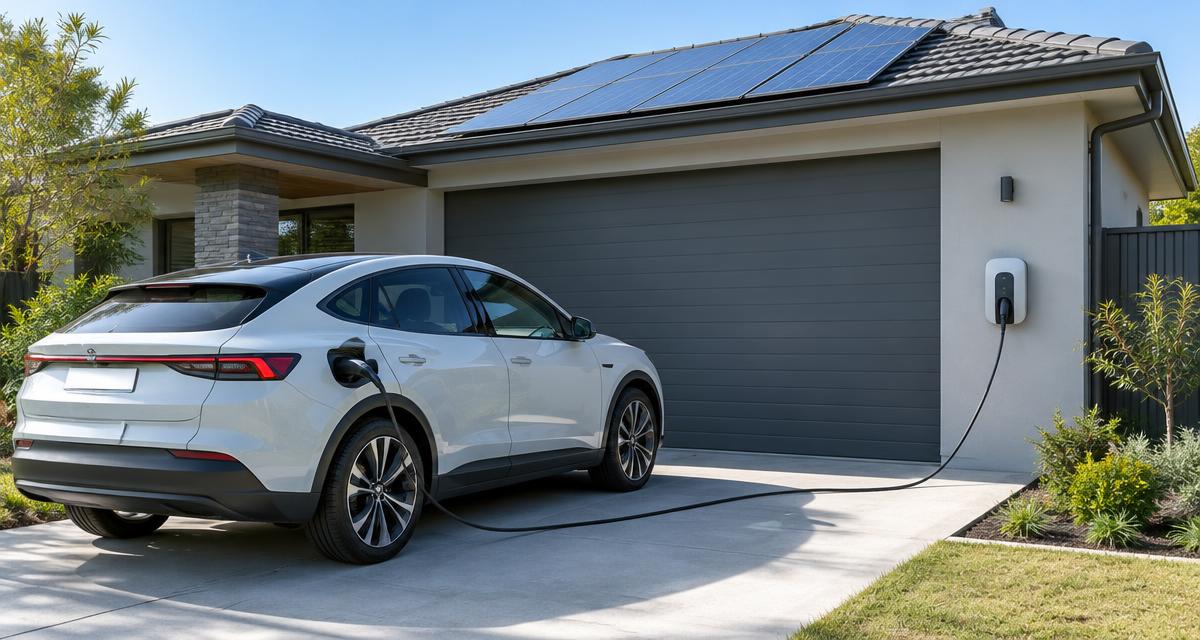
Illustrative home electrification image, not a completed Braytech project. EV charging and solar do not automatically require three phase.
Key takeaways
- Assess the whole home’s demand, not just one appliance’s advertised power rating.
- Many EV chargers, induction cooktops and solar systems work on single phase.
- Three-phase capacity is limited by the approved connection, cables and protection; it is not unlimited power.
- Load management or a suitable single-phase upgrade may be an alternative to changing the supply.
- Service, metering, consumer mains and switchboard work need to be coordinated as one scope.
What is single-phase power?
Single-phase supply is a common residential arrangement that provides one phase to the home. The switchboard then distributes that supply to separate circuits for lights, power points and fixed appliances. Having many circuits does not mean the property has three phase: those circuits can all share the same incoming phase.
The connection has a finite capacity, set by factors including the service arrangement, protective devices and cable ratings. Adding a breaker or a larger appliance does not increase that incoming capacity. A good assessment separates the capacity of an individual circuit from the capacity available to the whole house.
What is three-phase power, and what changes in a house?
Three-phase supply brings three phases to the property. Ordinary household circuits can be distributed across them, and equipment designed for three-phase operation can use the appropriate connection. For a homeowner, the practical benefit is the ability to accommodate suitable higher-demand equipment and spread household loads across the supply.
It does not make every existing power point more powerful, and it does not automatically lower electricity bills. Your approved connection and the installation still have limits. An electrician plans how circuits are distributed so one phase is not overloaded while the others have spare capacity. The appliance’s own design determines whether it uses one phase or three.
How can you tell what supply your home has?
Connection records, meter information and switchboard labelling may identify the supply. Ask your electrical contractor or network to confirm if you are unsure. The number of visible switches, a solar installation or a large house is not conclusive evidence of three phase.
Do not remove switchboard covers or open metering equipment to investigate. A safe external photograph can help with an initial enquiry, but the contractor still needs to confirm the actual connection and cable arrangement. A board prepared for three phase is not proof that all three phases have been connected.
What makes homeowners consider a three-phase upgrade?
The usual trigger is a change in how the property will use electricity. Large ducted air conditioning, workshop machinery, major renovations or several high-load appliances running together can make the existing supply unsuitable. Some equipment is specifically designed for three-phase operation, which changes the decision from optional extra capacity to a compatibility requirement.
Induction cooking, EV charging, solar and batteries belong in the planning discussion, but none is a universal three-phase requirement. Give the electrician actual equipment specifications and future plans, including a second vehicle or an additional dwelling. A wish list is useful; treating every future appliance as running at maximum power continuously is not a realistic assessment.
Repeated tripping or dimming is a reason for investigation, not proof that three phase is the cure. Faults, loose connections, circuit overloads and supply limitations are different problems. Repairing a fault comes before choosing a larger connection.
Does an EV charger automatically need three phase?
No. Many home EV chargers operate on single phase. The appropriate choice depends on the charger, the vehicle’s AC charging capability, available supply capacity and how much energy you need between trips. Buying a three-phase charger cannot make a vehicle accept a higher charging rate than its onboard charger allows.
Consider the hours the car is normally parked, rather than assuming the fastest possible charger is necessary. Charging overnight, scheduling around other loads or using compatible dynamic load management may suit the existing supply. The electrician must still check the dedicated circuit, protection and installation requirements.
Ausgrid’s EV charging information is a useful starting point for network considerations. The equipment manufacturer’s specifications and your site assessment determine the actual installation, not the fact that the car is electric.
Do solar, batteries or induction cooking require three phase?
Not automatically. Single-phase solar and battery systems exist, as do induction cooktops designed for single-phase connection. Check the exact model rather than relying on the appliance category. Some cooktops have different supported connection arrangements; the manufacturer’s instructions and circuit design matter.
For solar and batteries, inverter size, phase arrangement, export limits and network approval are separate questions. A three-phase supply does not guarantee approval for any inverter size or unlimited export. Battery backup also depends on the system design: it may not power every circuit or every phase during an outage.
Ausgrid’s solar connection guidance helps explain why generation needs a connection assessment. Tell the contractor your intended inverter and battery arrangement, along with cooking and heating changes, so supply and generation are considered together rather than in separate quotes.
Do I actually need three-phase power?
Start with the equipment requirements and a load assessment. Three phase is worth considering when a specified appliance needs it or when assessed household demand cannot be accommodated by a suitable single-phase arrangement. If the existing supply can serve the planned loads safely, changing phases may add work without a useful benefit.
- Confirm whether any planned appliance genuinely requires three-phase input.
- List what is likely to run together: cooking, heating, hot water, EV charging and workshop loads.
- Ask whether scheduling, load management or changes to individual circuits would resolve the constraint.
- Check existing supply, consumer mains and switchboard capacity before choosing an upgrade.
- Compare options against future plans and the network’s available connection capacity.
| Situation | Three phase automatically required? | What should be checked? |
|---|---|---|
| One home EV charger | No | Vehicle AC limit, charger rating, daily driving, supply capacity and load management. |
| Induction cooktop | No | Model connection options, circuit capacity and other simultaneous loads. |
| Solar or battery system | No | Inverter design, network approval, export limits and backup arrangement. |
| Large ducted air conditioning | No, unless the chosen unit requires it | Manufacturer’s input requirements and total household demand. |
| Workshop machinery | Sometimes | Whether the specific machine needs three-phase input and its starting demand. |
| Major renovation with several large loads | Not automatically | A whole-home load assessment, future additions and available network capacity. |
Why does total electrical load matter more than one appliance?
A house can have several high-powered appliances without all of them operating together. Conversely, a modest new charger can be a significant addition if the supply is already heavily used. The assessment considers expected demand and equipment behaviour, not merely a sum of every nameplate rating.
Load management can reduce or pause a compatible charger when other household demand rises. It does not repair damaged cables or make an unsafe board acceptable. The practical question is whether the proposed arrangement meets your needs within a safe, approved installation, rather than whether three phase sounds more future-proof.
What does Braytech check before recommending an upgrade?
Our three-phase upgrade service starts with whether the change is actually needed. The relevant checks include the existing load, appliance specifications, approved connection, service arrangement, consumer mains and switchboard. Future plans should be considered before cable routes or board space are committed.
Consumer mains are the customer’s main supply cables; their condition and rating matter as much as the board. The service connection must also support the proposed arrangement. Extra space in a switchboard is useful, but it does not prove that the mains or network connection can carry additional demand.
Ask for the recommendation in plain terms: what constraint has been found, what options address it and what equipment each option will support. The scope should distinguish essential supply changes from optional future capacity. No fixed price or guaranteed installation timeframe can be established without that scope.
What happens during a single-phase to three-phase upgrade?
The job begins with assessment and the applicable connection process. It may include service changes, consumer mains, metering coordination and work at the switchboard. Which components are retained depends on their suitability for the proposed installation; an upgrade is not simply fitting a different main switch.
Service work may require an appropriately accredited and network-authorised Level 2 ASP. Metering can involve the retailer or metering provider as well, so ask who coordinates it. The contractor should explain the planned disconnection and reconnection, testing and completion records before the outage is booked.
Tell the contractor about medical equipment, home working or other supply-dependent needs before scheduling. The outage and completion arrangements depend on the actual work and relevant parties. Do not assume the entire process can be completed within a particular day from an online description.
Will the switchboard need upgrading too?
It may. The board needs a suitable configuration, ratings, protection and space for the intended circuits. An existing board may be adaptable, or replacement may form part of the scope. The condition of older equipment and the wiring connected to it must also be considered.
A switchboard upgrade and a supply-capacity upgrade solve related but different problems. New protective devices do not increase the incoming supply on their own, and three-phase service does not remove faults from old circuits. Ask the quote to explain both sides so you know what the proposed work actually achieves.
Frequently asked questions
Does every EV charger need three-phase power?
No. Many home chargers work on single phase. The choice depends on the vehicle’s AC charging capability, charger specifications, available supply and how much charging you need; load management may be an option.
Do I need three phase for an induction cooktop?
Not necessarily. Many cooktops support single-phase installation. Check the specific model’s connection instructions, the required circuit and total household load before deciding on a supply upgrade.
Does rooftop solar require three-phase supply?
No. Single-phase solar systems are available. Inverter size, phase arrangement, network approval and export limits determine the suitable connection; three phase does not guarantee unlimited solar export.
Will three phase make my electricity cheaper?
Not automatically. Three phase changes the supply arrangement and available capacity, not the energy an appliance needs to do the same work. Your tariff and actual consumption determine electricity charges.
Can I upgrade just the switchboard instead?
Sometimes a board or circuit upgrade is the work needed. It does not itself increase the approved incoming supply. An assessment checks whether the constraint is the board, consumer mains, connection capacity or appliance requirements.
Does a three-phase upgrade require a power outage?
Connection and installation work generally involves planned isolation. The contractor should confirm the outage scope and coordinate authorised service and metering work; timing depends on the actual installation and relevant parties.
Planning an EV charger, new kitchen or larger air conditioning? Bring the equipment specifications and future plans to a supply assessment before committing to three phase.
Related services
Want it looked at properly?
One licensed, family owned team across the Sutherland Shire and St George. Lic. 376321C.